

The popular nursery rhyme This Little Piggy is an early childhood memory for many of us. It’s a poem that involves five little piggies, each corresponding to one of our fingers or toes. Kids love it, but if you pause to think, this simple rhyme raises a curious question: Why do humans have five digits on each of our four limbs in the first place?
The simple answer is it’s just how we evolved, but determining where these fingers came from and how is a different story. “When you’re talking about why we have five—not six or not four—fingers and toes, I think that’s quite a difficult question,” says Tetsuya Nakamura, an associate professor at Rutgers University’s department of genetics. To find the answer, we need to go back millions of years.
It all starts with a common ancestor
All tetrapods, a group that include amphibians, reptiles, birds, and mammals, derive from a common fish ancestor. “If you ask, ‘where did we come from?’ Our common ancestor was fish,” says Nakamura.
Fish initially developed limbs to walk on land during Earth’s Devonian Period, which occurred approximately 360 million years ago. A relatively short time later (evolutionarily speaking), the first four-limbed creatures—which had up to eight digits on each extremity—shed their extra digits. From then on out, five fingers and five toes became a standard feature for the world’s inaugural tetrapods.
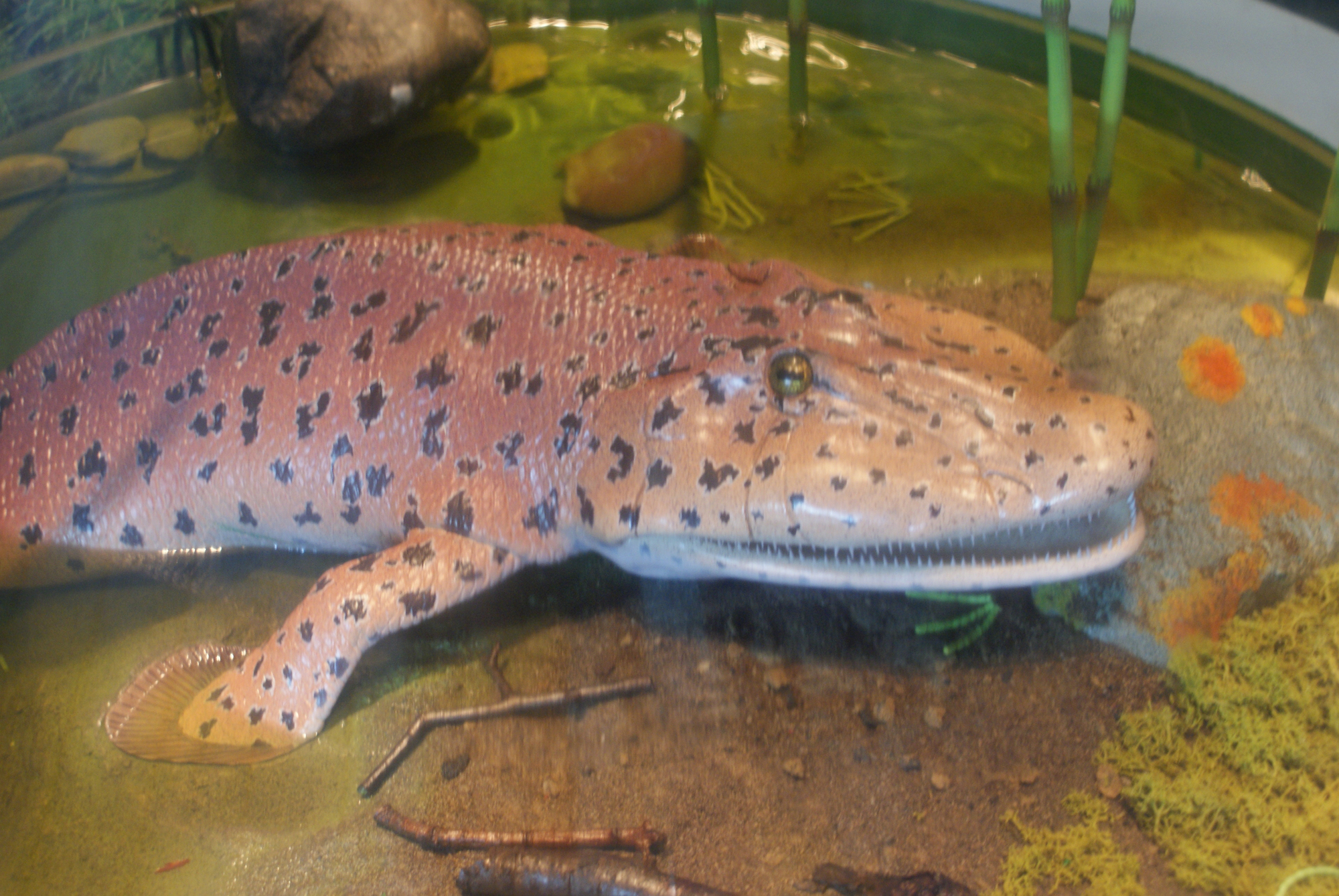
That five-digit plan soon became encoded in our early ancestors’ Hox genes, a set of master control genes that act as a genetic blueprint, assuring that body parts, organs, and limbs end up in their correct locations. Ever since, those Hox genes have determined that all our common ancestors have evolved from that five-digit blueprint.
Of course, not every living vertebrate has five fingers and toes, but more than 99% of tetrapods (all land species with vertebrae) share the same five-fingered bone structure. This includes sea lions, whales, and seals, which have five finger-like protrusions hidden inside their flippers, and bats, born with webbed fingers that form the structure of their wings. Even horse and bird embryos briefly start off with five digits before redeveloping into hoofs or (in the case of avians) a lesser number of toes.
Only one in 500 to 1,000 humans are born with extra fingers or toes. This birth difference is known as polydactyly, and is linked to an overexpressive gene known as sonic hedgehog (you read that correctly!).
Tracing it back to fish
Still, it wasn’t until 2016 that a group of scientists from the University of Chicago determined how a fish’s fin rays (which are the bony skeletal elements that provide structure, flexibility, and added support for fish fins) eventually evolved into fingers and toes. Nakamura was a member of the team.
The scientists used tiny, ray-finned fishes like the zebrafish, medaka, and other tropical fish that you often find in home aquariums for their study. They then utilized CRISPR-Cas, a gene-editing technique that allowed them to alter fishes’ DNA, to delete Hox genes required for limb development.
From there, the scientists compared embryonic cells in these mutant fish to mice as they grew and developed, eventually determining a genetic connection between the two. “We found that our fingers and fish fin rays use the same Hox genes and their functions to develop,” says Nakamura. In other words, fish fin rays and our fingers derive from the same genetic toolkit.
What it all means
While their research pinned down a direct correlation between the fin rays of fish and the digits of tetrapods, there’s still a lot to learn about how humans developed fingers and toes. “We found that our fingers probably evolved from fin rays, despite the fact that they’re very different structures,” says Nakamura.
“Many questions remain,” he says. “For example, how did they transform to fingers? And what kind of genes and molecules regulated this transformation?” With better gene-editing tools like CRISPR-Cas9, a more precise kind of CRISPR-Cas system, appearing on the scene over the last decade, Nakamura believes that answers may come sooner than later.
Other commonalities
According to Nakamura, tetrapods and fish are genetically similar in other ways as well. For example, the hind limbs of land vertebrates evolved from the pelvic fins of ancestral lobbed-fin fish, while shoulder girdles (the bony structure that forms the foundation of our shoulders) developed from fish gill arches, which are the skeletal loops that support a fish’s gills for breathing and feeding.
Related ‘Ask Us Anything’ Stories
“Although fish don’t have necks,” says Nakamura, “somehow during evolution, humans separated the skull bone from the shoulder girdle, creating the neck space.” This allowed us to move our heads independently from our bodies for things like hunting and scanning the horizon.
It’s what’s known as an “evolutionary innovation,” a new trait or feature that allows organisms to further function and adapt, much like how we came to have fingers and toes. “We took the structures that existed in fish fins,” says Nakamura, “and our bodies changed their development over time to finger-like tissues that are more suitable for land.”
It’s just a number
As to why we have five fingers and five toes? That remains inconclusive, but the number sure does make for a good nursery rhyme.
In Ask Us Anything, Popular Science answers your most outlandish, mind-burning questions, from the everyday things you’ve always wondered to the bizarre things you never thought to ask. Have something you’ve always wanted to know? Ask us.
The post Why do we have five fingers and toes? appeared first on Popular Science.
Thanks for sharing. I read many of your blog posts, cool, your blog is very good.
Thank you for your sharing. I am worried that I lack creative ideas. It is your article that makes me full of hope. Thank you. But, I have a question, can you help me?
Thank you for your sharing. I am worried that I lack creative ideas. It is your article that makes me full of hope. Thank you. But, I have a question, can you help me?
Your article helped me a lot, is there any more related content? Thanks!
I don’t think the title of your article matches the content lol. Just kidding, mainly because I had some doubts after reading the article.