
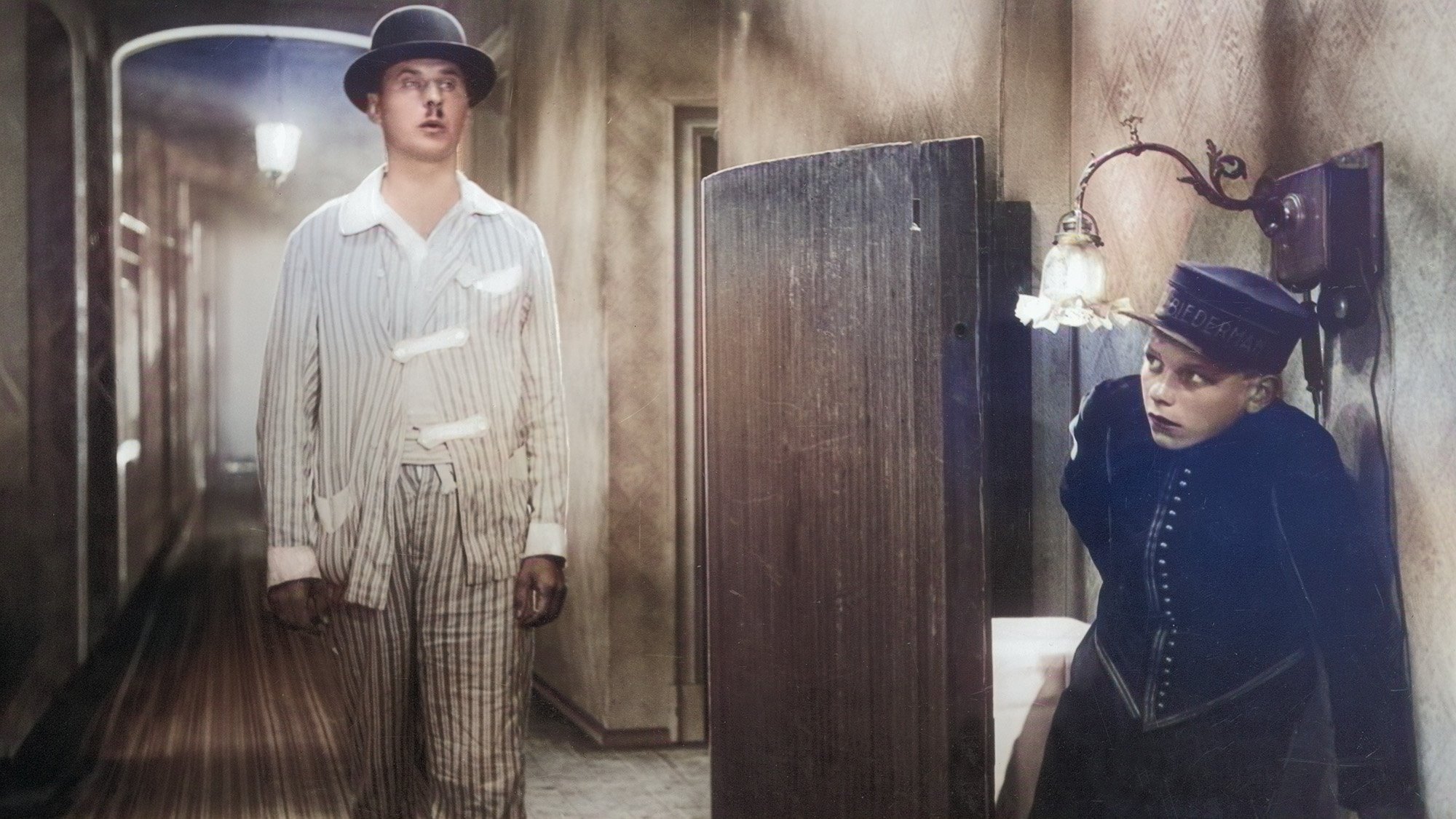
It’s like something out of an old-school Looney Tunes cartoon: a gorilla, sound asleep and snoring in his nest high in a tree, suddenly stands up and takes a few steps. For the gorilla, this would be a very short story with a very bad ending.
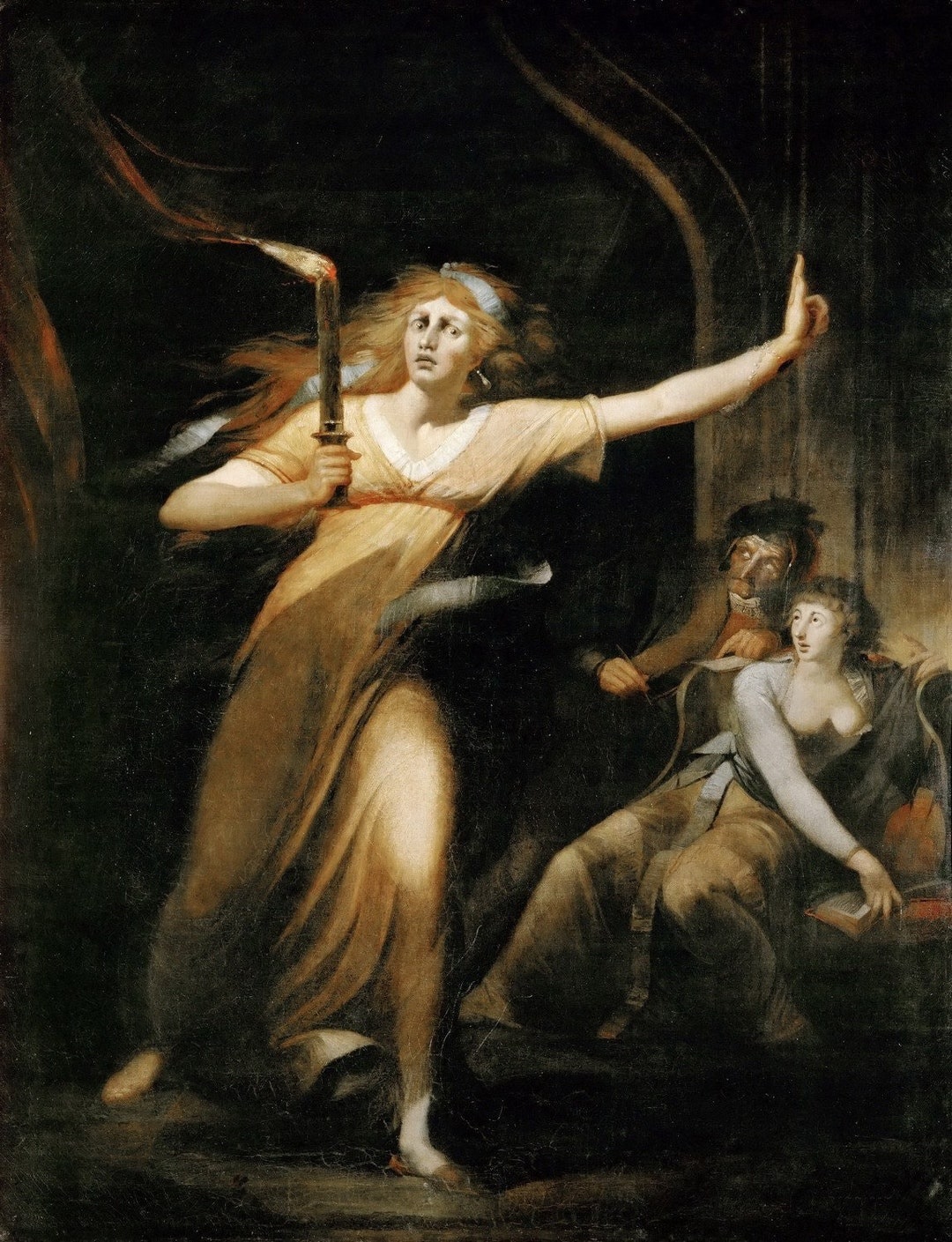
Humans, on the other hand, sleepwalk all the time. It’s a behavior that has fascinated and freaked us out for centuries, from the hand-wringing somnambulism of Lady Macbeth to the strange murder cases involving Ambien-induced sleepwalking. We find the condition unsettling, mysterious, and even funny, possibly because it violates a fundamental idea—that sleep is a state of stillness, of surrender.
Yet some humans seem to have missed that memo. Sleepwalking affects an estimated five percent of children and 1.5 percent of adults. Which raises an interesting question: Why us?
Other animals have their own versions of restless sleep: the dog’s paws paddling as if in mid-chase, the cat’s whiskers twitching in annoyance at some imaginary unwanted affection. But true sleepwalking, involving standing, walking, and navigating obstacles, has not been documented in other species.
“Humans are probably not unique in having odd motor events during sleep, but sleepwalking as we define it is overwhelmingly human,” says David R. Samson, associate professor of evolutionary anthropology at the University of Toronto and author of the new book The Sleepless Ape: The Story of Sleep in Human Evolution.
So, why do only humans do this? The answer has everything to do with where our ancestors slept.
What happens when you sleepwalk?
Sleepwalking primarily occurs during deep non-REM sleep, says Samson, who describes sleepwalking as a “state dissociation.”
“Parts of the brain involved in movement and arousal come online while regions involved in reflective awareness, judgment, and memory remain in a sleep-like state,” he says.
In practical terms, this means the body can do surprisingly complicated things—navigate stairs, open doors, wander down a dark hallway—while the part of the brain responsible for awareness, judgment, and memory remains essentially asleep. Which is why sleepwalkers can appear eerily purposeful while having absolutely no idea what they’re doing.
In sleepwalking, as Samson puts it, “the body can move before the waking mind has fully arrived.”

Samson has a fairly straightforward explanation for why humans sleepwalk while a sleeping gorilla in the tree stays put. Nearly all primates sleep off the ground—on branches, in tree holes, on sleeping platforms—which means a sleepwalking primate would likely fall or be killed.
“Selection would be severe,” says Samson.
Sleepwalking is a glitch, not a feature
Samson doesn’t see sleepwalking as a behavior that evolved for a purpose. Instead, he says, it’s a rare flaw in an otherwise finely tuned sleep system.
“For most primates sleeping in trees, this vulnerability would be catastrophic,” he says. “But in the human ‘sleep shell’—with socially buffered camps, shelters, fire, bedding, and shared vigilance—the immediate penalty of getting up from sleep may have been reduced.”
In other words, the communal safety net our ancestors built for themselves at night did the protective work that staying perfectly still once did.
This is an especially compelling example of “relaxed selection.” In relaxed selection, certain unfavorable traits are able to persist because the environment doesn’t weed them out.
Natural selection didn’t get rid of sleepwalking in humans, because our early environment didn’t punish sleepwalkers. It likely shielded them “once our ancestors began sleeping in safer, socially protected ground sites,” says Samson.
The body moves, but nobody’s home
A large part of what makes sleepwalking so disorienting—for both walkers and witnesses—is the gap between what’s happening on the outside and what’s happening on the inside. Samson has observed this firsthand in a close friend and colleague with a history of sleepwalking episodes.
“One night, I was walking down a dark hallway to use the bathroom when I saw his silhouette at the other end. Suddenly, he charged toward me, grabbed me, and we ended up in a brief, bewildering struggle in the hallway,” he says. “Then, just as abruptly, he stopped, turned around, and went back to bed as though nothing had happened.”
The next morning, Samson’s friend had no recollection of the skirmish in the hallway, but gave his own vivid account of a much higher-stakes struggle.
“When I told him what happened, he said that in his dream, a wall of lumber was falling on me and he was trying to save me,” Samson says.
“That, to me, is one of the most striking things about these episodes: From the outside, the behavior can look sudden, physical, and even alarming, but from the inside, the dream logic may be protective, purposeful, and emotionally coherent.”
Sleepwalking runs in the family
The protective “sleep shell” might explain why humans have the luxury of being able to sleepwalk, but the evolutionary story gets even more interesting when you look at who actually sleepwalks.
Genetics plays a clear role, Samson says, though there’s no single “sleepwalking gene.” It’s more of a knack for sleeping so deeply you can’t quite claw back up to the surface—a knack that tends to run in families.
Related ‘Ask Us Anything’ Stories
Sleepwalking also shows up more often in childhood, when deep non-REM sleep is most prevalent and the brain’s sleep-wake cycles are still maturing. Genetics plays a role here, too. Having a mom or dad who sleepwalks definitely increases your chance of plodding to the kitchen while catching some Z’s.
One longitudinal study found that children with no family history of sleepwalking had about a 22 percent chance of sleepwalking themselves. But that jumped to 47 percent with one sleeping parent, and 61 percent when both parents were sleepwalkers.
“There is clearly a familial, genetic component,” says Samson.
Most of us file sleepwalking away as a quirk, a punchline, or a far-fetched plot device. But Samson says it can also reveal important things about your health.
“Sleep deprivation, fever, stress, alcohol, some medications, and sleep disorders such as obstructive sleep apnea can all increase risk.” So if you’re prone to sleepwalking, it’s important to consider outside factors that might be contributing to your 2 a.m. wander down to the kitchen.
Sleepwalking presents a very strange vulnerability for people, one that’s stuck around precisely because, for much of human history, it didn’t need to be fixed.
But at least we can rest assured that even with all the twitching and kicking, our pets won’t go wandering off into the night. We humans might be summoned into motion by whatever’s playing out in our sleeping brains, but our furry little buddies, snoozing blissfully through the day, seem to have a more efficient setup. They’re not going anywhere.
In Ask Us Anything, Popular Science answers your most outlandish, mind-burning questions, from the everyday things you’ve always wondered to the bizarre things you never thought to ask. Have something you’ve always wanted to know? Ask us.
The post Why only humans sleepwalk appeared first on Popular Science.