
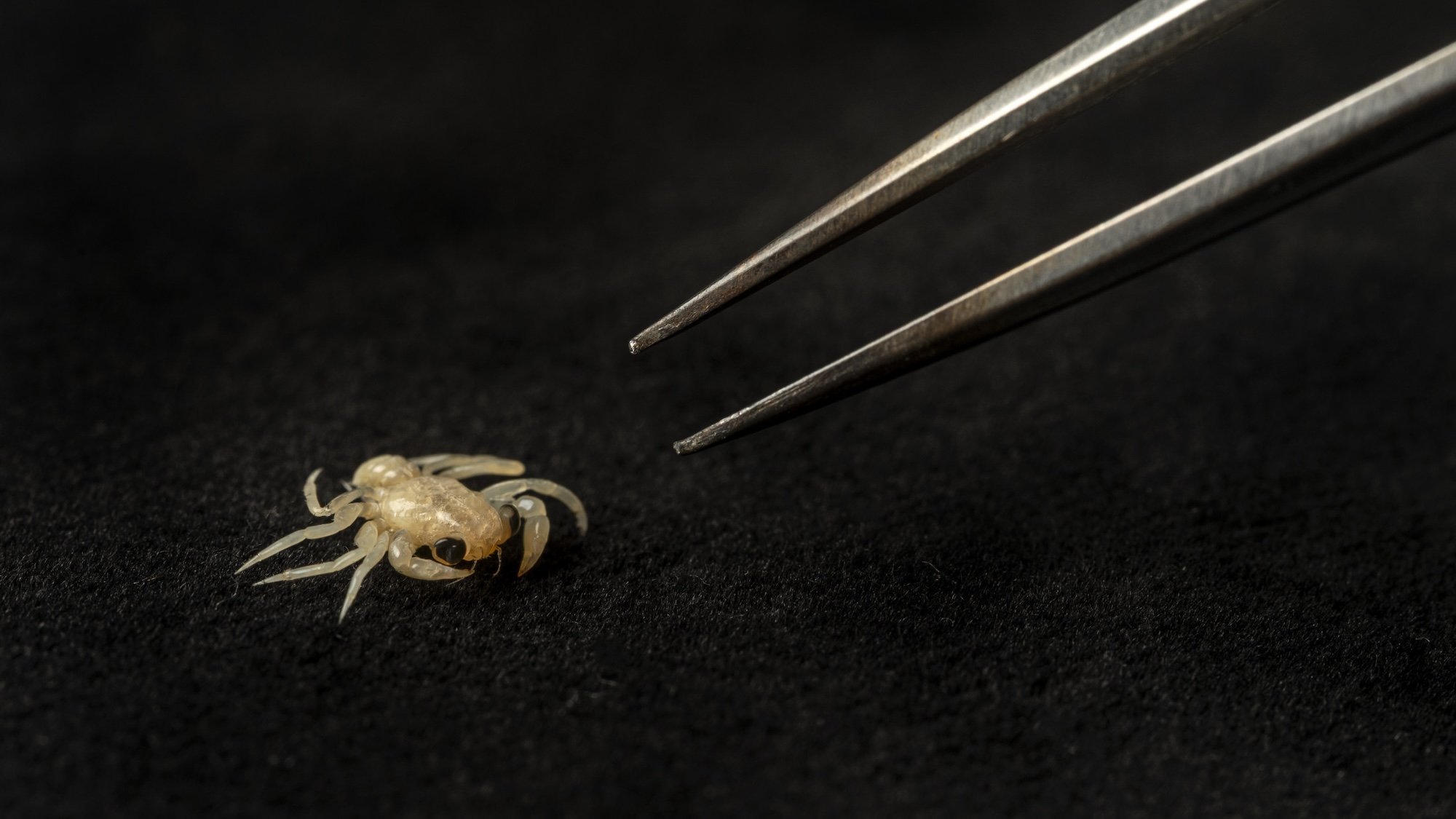
Many organisms often set up their homes on sea turtles. Known as epibionts, the most noticeable passengers are usually the algae and barnacles clinging to the marine reptile’s protective shell. Other epibionts include tiny crabs in the Planes genus who frequently hitch rides inside the crevices between a turtle’s shell and body.
Biologists at the Florida Museum of Natural History recently confirmed a surprising addition to crustaceans’ roster of ocean taxis, however. After examining dozens of specimens collected during surveys off Costa Rica’s Pacific Coast, researchers now know that some small crabs will occasionally climb aboard sea snakes. But these aren’t the Planes crabs the biologists expected. As they describe in a study published in the journal Ecology and Evolution, the clawed invertebrates instead belong to three species related to Planes within the same family.
University of Florida (UF) marine herpetologist Joseph Pfaller first noticed one of the suspicious crabs back in 2012 while studying the yellow-bellied sea snake (Hydrophis platurus). More specifically, he was examining the reptiles’ old skin. Sea snakes shed their scales just like their land-based cousins, but they accomplish the task much differently. Without any hard surfaces to slide against, sea snakes coil into loops to generate enough friction to remove the outer epidermal layers.
“When you find a sea snake’s skin, it’s usually in a knot,” Pfaller explained in a UF profile.
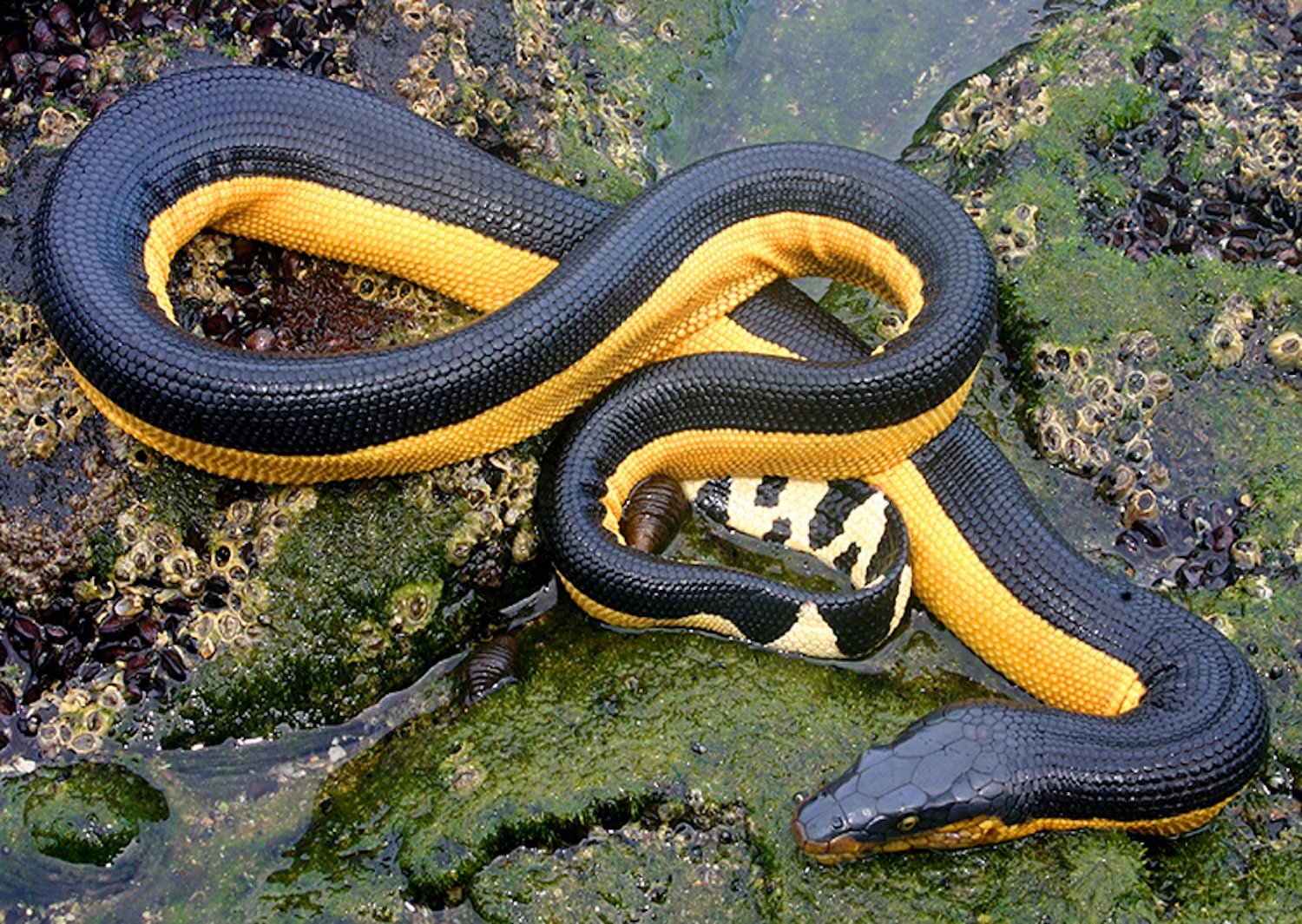
After only collecting a couple of snakes, Pfaller soon watched a small crab fall off one of them. He knew the ocean serpents sometimes hosted barnacles or other stationary organisms, but couldn’t recall a similar situation involving crustaceans—so he started paying attention.
Pfaller amassed 371 sea snakes by the end of his expedition, and he identified far more than crabs. Some of the reptiles also hosted shrimps, snails, and even a clingfish. Pfaller and his colleagues assumed no one previously noticed the additions because marine biologists are generally more focused on the yellow-bellied sea snakes themselves due to their colorful appearance, uncommon distribution, and fascinating underwater behaviors.
Technically speaking, most of the crabs weren’t actually crabs just yet. Instead, most of Pfaller’s collection were considered to be in megalopae—a phase between larva and adult life. That said, at least one young crab appeared to belong to the Planes genus.
Although Pfaller stored the preserved specimens at Florida Museum of Natural History, he soon transitioned to focusing on sea turtles instead of snakes. It took a decade before the oddities resurfaced. After casually mentioning the collection to University of Guam crustacean expert Robert Lasley, his colleague couldn’t resist the joke:
“‘Wait! Wait! Wait! Are you saying you have planes on a snake?’” remembered Pfaller, referencing the cult horror movie Snakes on a Plane.

The pair decided to follow up on his specimens by sequencing their DNA, assuming to confirm their Planes suspicions,but results collected by study co-author and UF invertebrate researcher Soma Elefánti weren’t what they expected.
“Honestly, the thought that we could name this study ‘Planes on a Snake’ was enough to get me motivated, but when we got the results, it was evident that something weird and interesting was going on here,” Lasley said.
As it turned out, none of the megalopae were in the Planes genus. Instead, they belonged to other species in the Grapsidae family, whose adult crabs live on Costa Rica’s coastal trees and rocky shorelines. The study authors knew most crabs release larvae into the water, regardless of living on land or in the water when adults. Because of this, they theorized that the larvae that survived long enough to transition into megalopae instinctually started scoping out a more solid habitat.
“They can swim well, but these things are also built to climb or settle onto something,” Lasley said.
The megalopae that eventually ended up on coastal drift lines likely encountered sea snakes, latched on, then were swept back out into the ocean.
“The snakes are just there, and the crabs don’t know the difference,” explained Pfaller.
The reason no adult Planes crabs were found on the snakes can also be explained by their family tree—Planes crustaceans evolved to know better than to try making a home on the reptiles. Meanwhile, these other species in the Graspidae family are still learning. But since these floaters would never make it back to shore, evolution would have likely taught them the hard way.
“It’s not a good idea. These crabs [had] made a poor decision,” said Lasley.
The post Tiny crabs discovered hitching rides on sea snakes appeared first on Popular Science.