
Since the Soviet Union’s Luna 2 probe crashed into the moon’s surface in 1959, the first-ever human-made object to reach the moon, humanity has racked up over 140 missions to our only natural satellite. These missions have delivered 12 humans, seven lunar rovers, and 412,000 pounds (187,000 kilograms) of discarded materials to the moon’s surface. That’s the weight of a Boeing 747 passenger plane.
But these leftovers aren’t all space junk. In fact, some of this debris may prove useful for future lunar exploration.
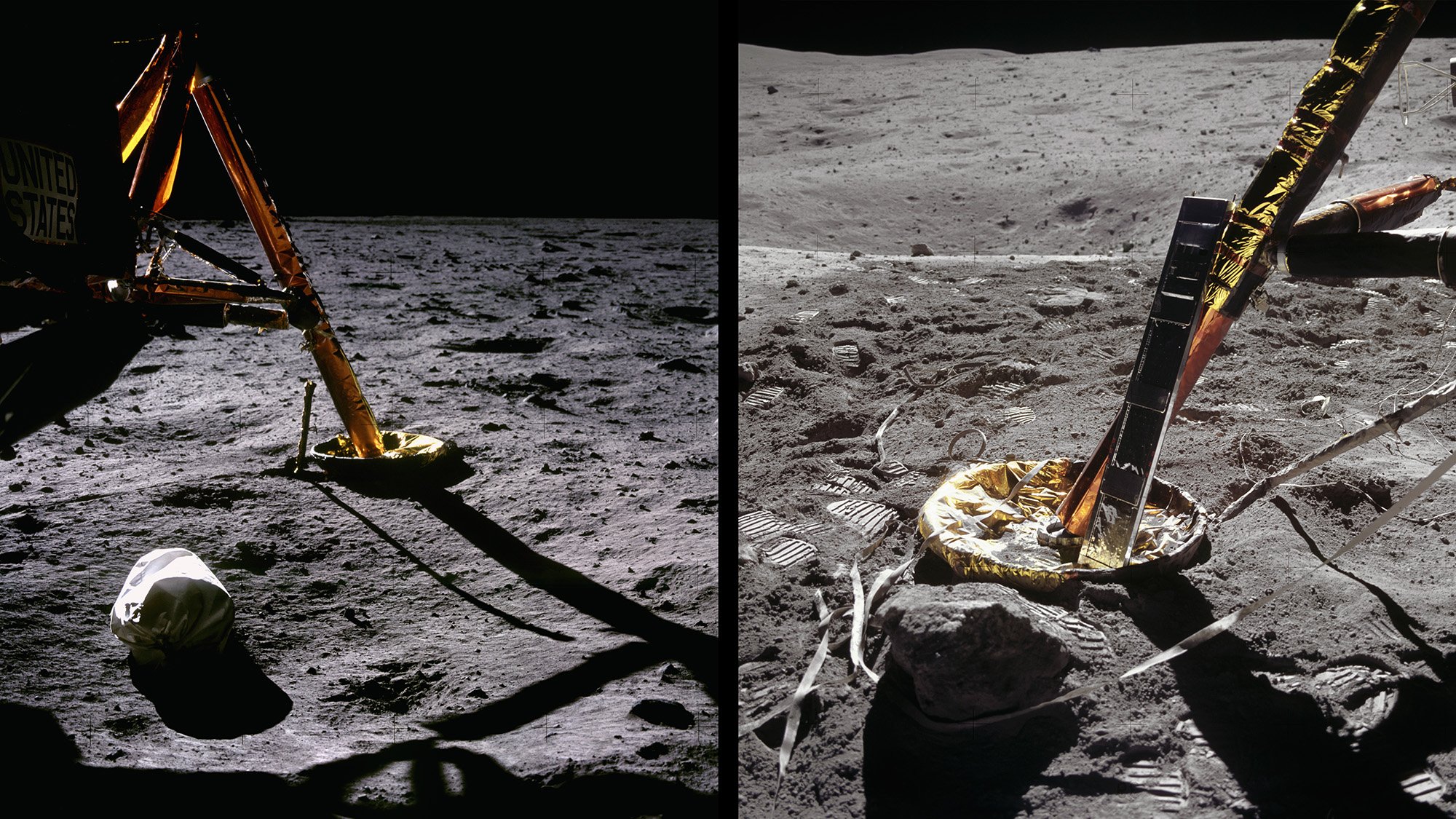
A lot of moon junk is old landing gear
A significant chunk of the space trash on the moon consists of old landing gear from previous moon visits, Aidan Cowley, a science officer at the European Space Agency, tells Popular Science.
Early moon exploration missions, like NASA’s Apollo missions, would land on the moon using a non-reusable lunar module, says Cowley. “It would land, and then the top part of that module would return back to lunar orbit to rendezvous with the command module and return back to Earth. So, the base part of this vehicle would remain.”
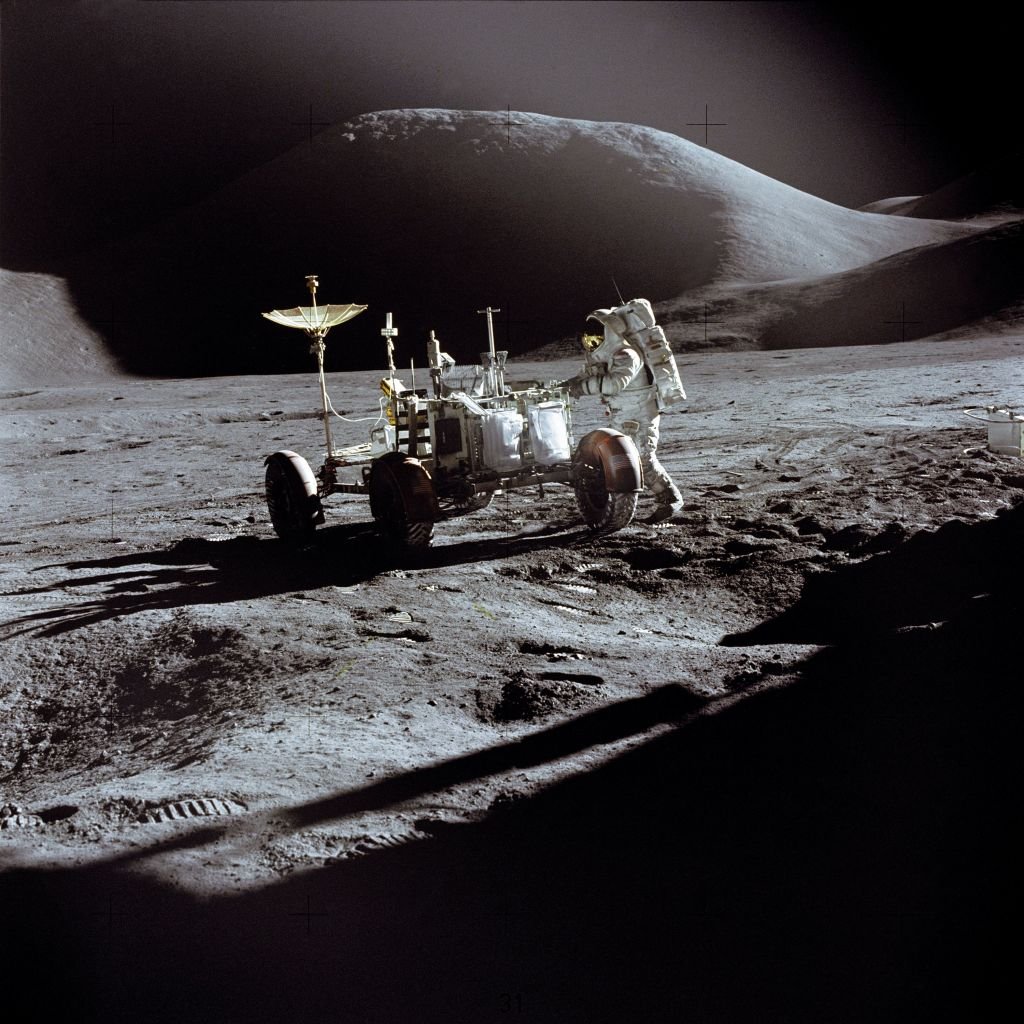
Lunar rovers have also been left behind
Leftover lunar rovers—manned or unmanned land vehicles used to explore the moon’s surface—also contribute to the growing mass of junk. These include China’s robotic Yutu rover, which sent information back to Earth for 31 months, as well as those that crash-landed, like the United Arab Emirates’s Rashid rover.
Other types of moon trash
Other trash on the moon includes scientific equipment, toolboxes, and lunar impactor probes. These are devices that smash into the moon’s surface, not by accident, but to fulfill specific objectives, like close-up imaging or to fire rocks and dust into the air for analysis.
Images of the moon’s barren landscape might make you think that these lunar leftovers simply sit around undisturbed until the visit of the next crewed mission. But that’s not the case.
Things left on the moon don’t have it easy
The moon is an incredibly harsh environment. It’s “constantly bombarded with micrometeorites,” explains Cowley. These tiny rock chunks, along with intense radiation, sunlight exposure, and dramatic temperature swings, will steadily wear down and damage objects.
The iconic American flag planted on the moon by Neil Armstrong and Buzz Aldrin in 1969, for example, has likely been bleached almost white by the sun.
Some moon trash could come in handy
But some of this damaged, degraded material could still have value for future moon exploration. Cowley says samples of human equipment on the moon could be assessed to understand how the environment alters them.
Studying the impact of micrometeorites on equipment, for example, “might allow us to produce better solar cell or solar panel protection, so they don’t get degraded for humans when humans may eventually live on the moon,” says Cowley.
Related ‘Ask Us Anything’ Stories
Future moon missions might be less wasteful
Ahead of plans by NASA and the China National Space Agency to send crewed missions to the moon in the next five years, more equipment will likely amass on the lunar surface. But there are reasons to think these future missions may leave less of a mess behind.
“You might see more emphasis these days on vehicles that have a reusable aspect,” says Cowley. “Maybe the lander can land as one unit and take off as one unit again,” he says. Spaceships in development like SpaceX’s Starship Human Landing System (HLS) plan to adopt this reusable design.
There’s already plans to reuse space trash
Even if more equipment doesn’t accumulate on the moon, Cowley says the ESA has made plans to reuse some of this moon trash. One project has explored the potential of 3D printing methods to incorporate lunar scrap into new materials. Such efforts will have to account for the likelihood that such materials will be contaminated by lunar dust—sharp, shard-like particles of the rocky lunar surface that can prove a further hazard to machinery.
Cowley says that the lightweight aluminum that makes up the shell of many lunar vehicles could be melted down using concentrated sunlight.
“Rather than bringing things here with you or mining them on the moon,” says Cowley, “you could actually just reuse the old equipment in the same way we recycle stuff down here on Earth.”
That lunar “junk” may prove invaluable to the first humans to one day call the moon home. Or, as the old saying goes, one person’s trash is another person’s treasure.
In Ask Us Anything, Popular Science answers your most outlandish, mind-burning questions, from the everyday things you’ve always wondered to the bizarre things you never thought to ask. Have something you’ve always wanted to know? Ask us.
The post How much trash is on the moon? About 412,000 pounds. appeared first on Popular Science.