
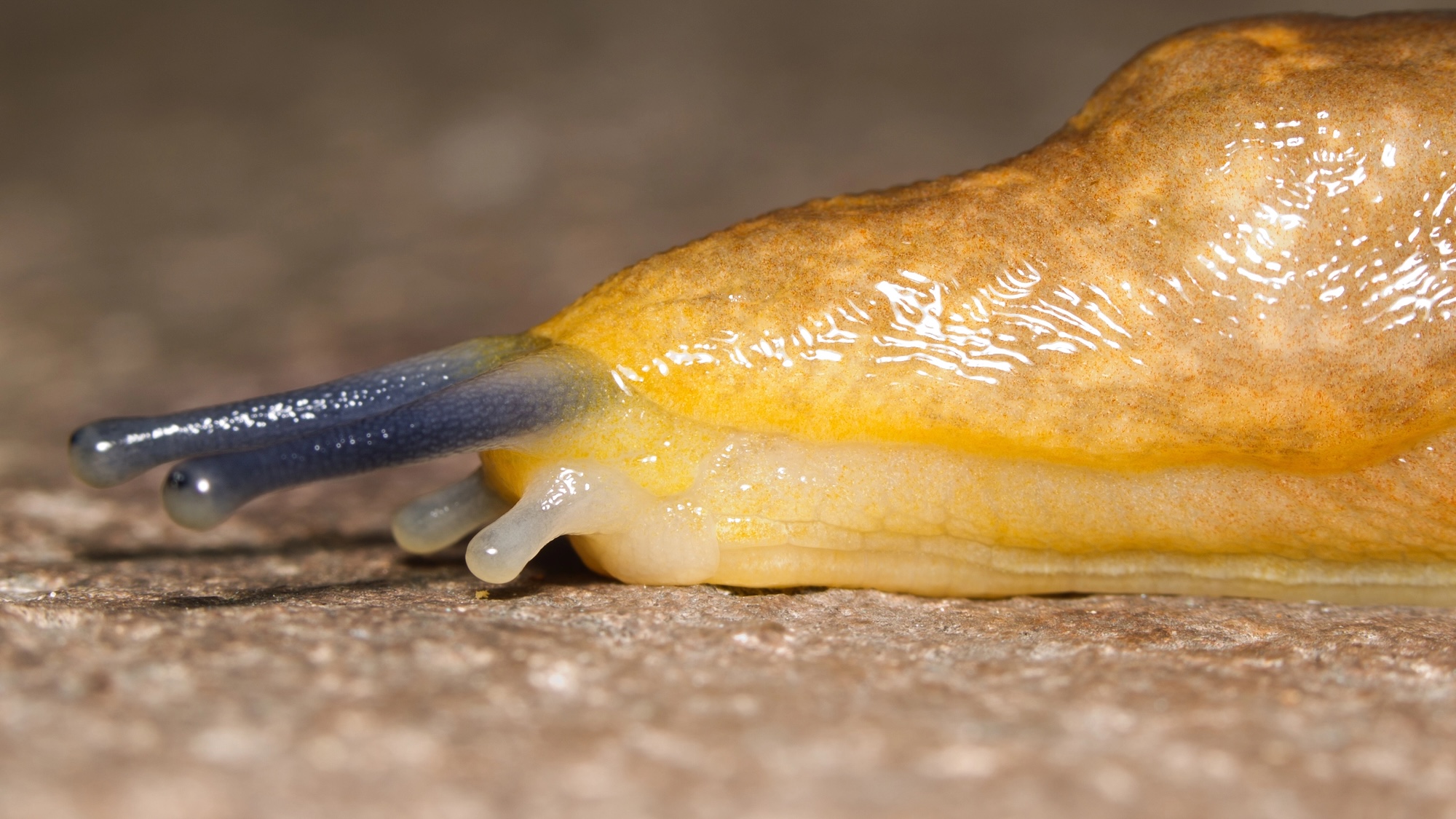
The winter months and post-holiday slump are notorious for their ability to turn even the most prepared person into a lethargic lump until the spring thaw. But if it makes you feel any better, you aren’t alone in the sluggish lifestyle. The staff at the Fort McHenry National Monument and Historic Shrine in Baltimore, Maryland, recently extended a sympathetic hand to the slimy mollusks with a few bits of trivia on their neighborhood slug population, who they describe as the “ultimate slow movers.”
For one thing, slugs will absolutely retreat into their homes if the conditions aren’t to their liking. In fact, the gastropods will often hide underground to ensure they avoid some of the coldest ambient temperatures. But it’s not always a death sentence when they can’t escape the frost. Studies have also shown that some species can endure extra-cellular ice formations in their tissues for at least some period of time. Meanwhile, their eggs have likely evolved to withstand the winter through a process of “supercooling” in which they lower their typical freezing temperature.
When it comes to slow movement, it’s hard to find a more ambling pace than the slug. At a top speed of around 6.5 inches per minute, the common banana slug (Ariolimax) is even confirmed to be the world’s slowest animal, beating out both sloths and snails. However, there’s a reason for their miniscule pace. Or—to put it more accurately—there’s no reason for them not to be so slow. Banana slugs mostly eat plants, mushrooms, and decaying matter, so they don’t need speed to catch any prey. On top of that, their slimy mucus secretions contain mouth-numbing chemicals and are extremely unpalatable to any would-be predators.
So if someone tries to make you feel guilty for winter laziness over the holidays, just respond with the snail’s life motto: “What’s the rush?”
The post An ode to slugs, the mascots of post-holiday laziness appeared first on Popular Science.