
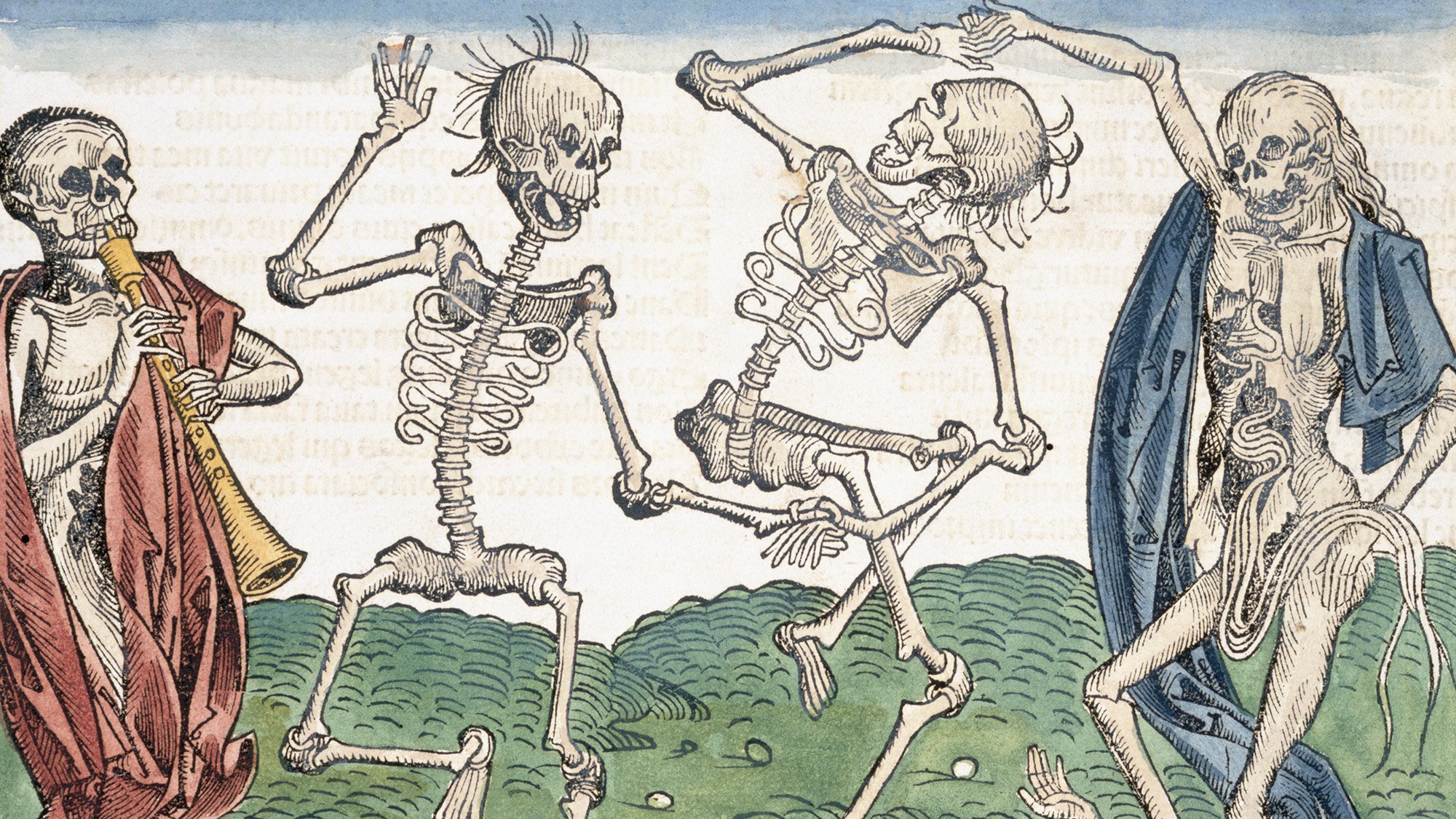
Death is supposed to be the end of the road. The lights are out, the curtain has fallen. No breathing, no heartbeat—end of discussion, right? Not quite.
In some cases, corpses twitch, flex, shift, change positions, or even make noises that could easily be mistaken for messages from beyond the grave. But before you call the Ghostbusters, take a deep breath. The explanation is less zombie apocalypse and more basic biology.
Even after the heart stops beating, the body still has a few tricks left up its sleeve. The results can be creepy, sure, but experts say they’re perfectly natural. Here’s why corpses sometimes move and make noise.
How much does your body move after you die
Our bodies can continue moving long after death. When researchers in Australia used time-lapse cameras to keep tabs on a decomposing human body, they discovered that it continued to shift for at least 16 months, with some parts moving as much as 20 total inches over the course of the study period.
Researchers call this “post-mortem movement”—and it’s a lot less dramatic than you might imagine.
“A body can move, but not necessarily in the way that I think most people envision,” Derek Boyd, a biological anthropologist who co-directs the Forensic Anthropology and Bioarchaeology Laboratory at the University of Nevada, Las Vegas, tells Popular Science.
“The movements are very subtle—you’re not going to see a body sit up or turn its head.”
Why do dead bodies move so much
After death, the human body moves through a pretty predictable series of decomposition stages. One of the earliest is rigor mortis, when the muscles stiffen and the body becomes rigid. As this process unfolds, a corpse may shift, creating the appearance of movement—but it’s easy to miss, Boyd says.
“You’re not necessarily going to see [the movement] unless you’re laser-focused on the body for the first 48 hours—and even then it’s just going to look like tension, just the body stiffening,” he says.
The next stages in which movement might occur are boat and post-bloat, says Boyd. When someone dies, the body’s own enzymes begin breaking down its cells, a process known as autolysis.

Meanwhile, bacteria and microbes start spreading throughout the body, digesting tissues and producing gases. This process, known as putrefaction, can “cause the body to become distended or start to bloat, and that bloating can result in a dramatic expansion,” he says. “The body inflates in various places. But, again, this is something that happens gradually.”
Eventually, those gases escape—and the body gradually deflates, sometimes causing small shifts in its position.
Finally, in the advanced stages of decomposition, the body’s soft tissues begin to dry out, a process known as desiccation. “We have ligaments that are attaching bones together, tendons connecting muscle to bone, and in these later stages of decomposition, those connective tissues can shrink and tighten—and, in doing so, they can pull on our skeleton in various ways,” he says.
Of course, not all postmortem movement comes from decomposition itself. Outside forces can also cause a body to shift or change position. Scavengers may drag or disturb remains while feeding, for example, while insects can move small body parts or contribute to the breakdown of tissues. Environmental factors, such as wind, flowing water, or shifting soil, can also displace remains over time.
Our bodies also make noises after we die
While we’re alive, our bodies are constantly making noise—burps, farts, stomach gurgles, and growls, creaks, and cracks. Considering how noisy our living bodies can be, it shouldn’t come as much of a surprise that they can continue making noises after death.
As gases build up during putrefaction, for instance, the body can produce gurgles, bubbles, groans, or even noises that sound like sighs, Sarah Chavez, executive director of the Order of the Good Death, a nonprofit that aims to change how people think about death and make end-of-life care and funeral options more accessible and equitable, tells Popular Science. Fluids and gases can also get pushed through the mouth or nose, which can sometimes create surprising sounds, she says.
“It can be startling if you’re not expecting it, but there’s nothing supernatural happening,” Chavez adds. “The body is just continuing to do what bodies do—break things down, move fluids and gases around, and occasionally make unintentional noises.”
Corpses are a ‘beautiful ecosystem’
Ultimately, the fact that bodies can move or make noises after death is a reminder that the human body is “a beautiful ecosystem of its own,” says Boyd.
In life, our bodies are home to countless microorganisms that interact with one another and help keep us alive. After death, those same microorganisms continue to play a role in the body’s breakdown, creating the conditions that can cause a twitch, a shift in position, or an unexpected sound.
The body no longer has thoughts, feelings, or aspirations, but it remains a complex biological system in its own right. “We are walking ecosystems, and we remain ecosystems even after death,” says Boyd.
And scientists are still learning what these postmortem ecosystems can tell us. For example, Boyd says researchers are exploring whether changes to the body’s microbial communities could help forensic investigators estimate how much time has passed since someone died—a “microbial clock” of sorts. In other words, the very same processes that can make a corpse move or make noises may also offer valuable clues about the biology of death itself.
In Ask Us Anything, Popular Science answers your most outlandish, mind-burning questions, from the everyday things you’ve always wondered to the bizarre things you never thought to ask. Have something you’ve always wanted to know? Ask us.
Related ‘Ask Us Anything’ Stories
Cremation or casket? Here’s the most eco-friendly burial option.
Can carnivorous plants eat people?
What happens when you donate your body to science?
How human composting turns bodies into soil
Real-life vampire birds hunt and drink blood in remote Ecuador
Some people really are werewolves—at least, in their minds
What happens to your body when you die in space?
The post Why do dead bodies move and make noise? appeared first on Popular Science.