
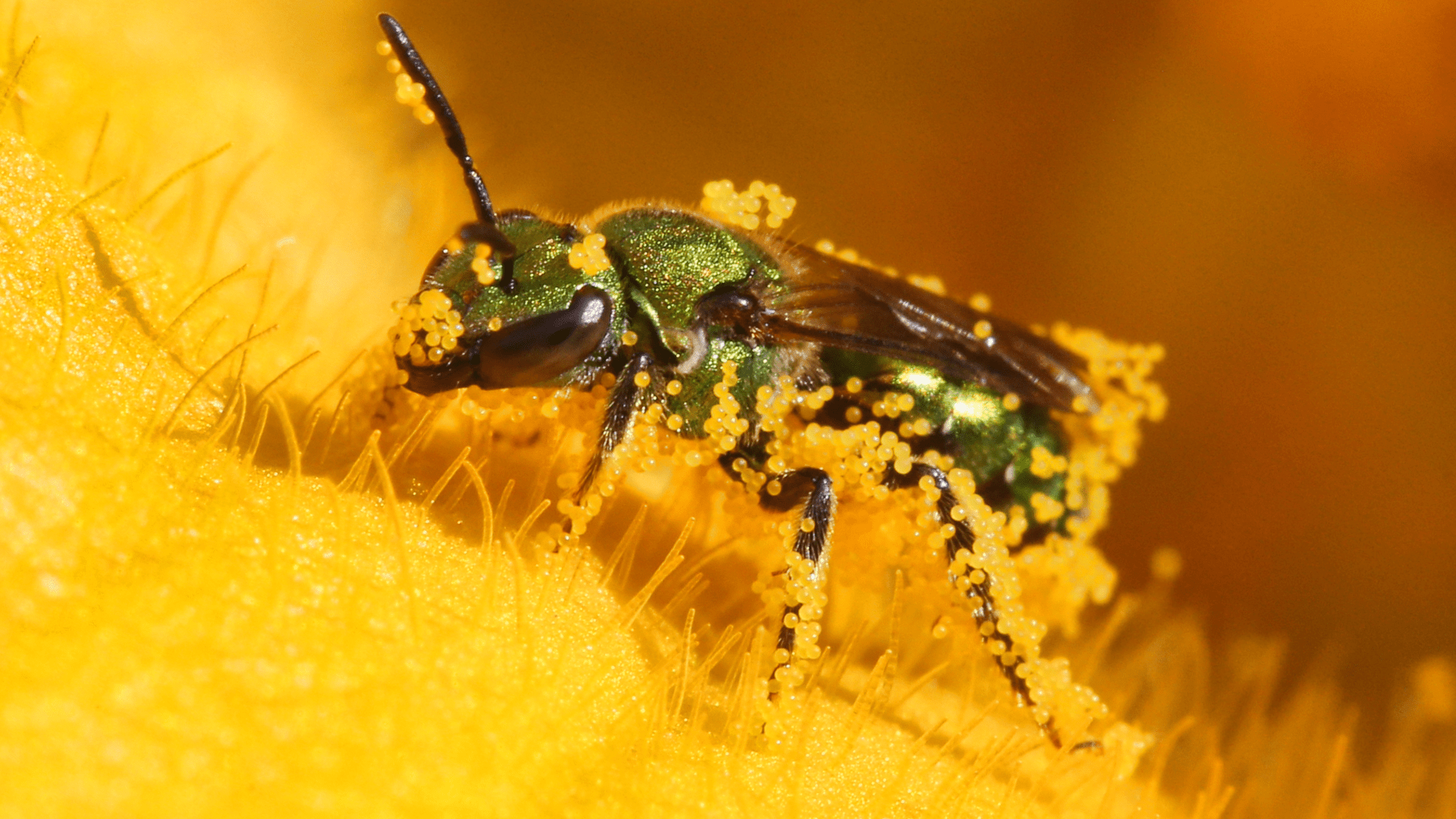
For humans, humidity often makes us cranky, sweaty, and downright uncomfortable. For sweat bees, humidity changes their already vibrant colors. According to research recently published in the journal Biology Letters, moisture in the air makes the bees go from blue to green.
“When people think of bees, they often picture drab, brown honey bees,” Dr. Madeleine Ostwald, a study co-author and behavioral ecologist at Queen Mary University of London, said in a statement. “In reality, bees are incredibly diverse and colourful—and we’re only just starting to understand how their appearance reflects the climate they live in.”
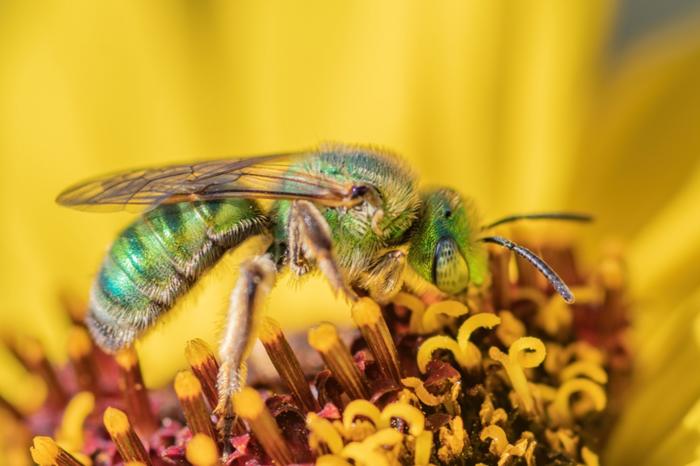
Insects use color to help control their body temperature, communicate, camouflage, and more. However, it’s still unknown how color shifts affect their behavior or ability to survive in the wild. There are nearly 4,500 known sweat bee species. These largely harmless bees are native to North America, but can be found on every continent except Antarctica. The name “sweat bee” comes from their supposed attraction to human sweat. As far as appearances, sweat bees are known for their bright, metallic green and blue hues that anecdotal evidence suggests change color from time to time. This study provides the first experimental proof of their chameleon-esque capabilities.
For this study, the team looked at the fine-striped sweat bee (Agapostemon subtilior), a species found in North America. They placed the bees in dry air, where they appeared a deep blue color. When the humidity increased, they changed into a more copper-green. Once the air dried out again, they returned to their original blue.
Related Color Stories
In most animals, color comes from pigments. Instead of pigments, sweat bees get their color from microscopic structures on their bodies that scatter and reflect light at particular wavelengths. This same wavelength warping effect creates the iridescent feathers of hummingbirds and cuttlefish’s shifting scales.
These tiny structures also swell slightly when exposed to moisture in some animals. The swelling makes them reflect more red colors. A similar process may be happening in bees—even if they are not turning red—but more work is needed to fully understand what’s going on behind the scenes.
The team also compared the color changes in the lab with those in the wild. They analyzed hundreds of photos posted to iNaturalist, comparing the sweat bee’s color with local humidity levels. The bees in drier areas tended to appear more blue, matching what they observed in the lab.
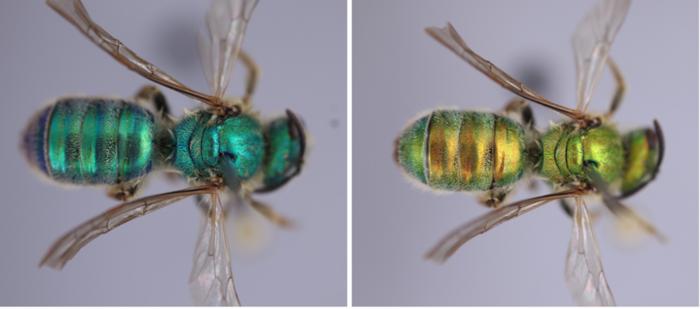
Surprisingly, the older museum specimens they also analyzed showed the strongest color changes. This could be because the bees’ outer shells slowly degrade over time, allowing moisture to get in more easily.
According to the team, these findings suggest that color changing may be common among bees. The insects already display a wide range of shimmering colours and live in environments ranging from dry deserts to moist rainforests.
“Most people associate colour‑change with animals like chameleons that actively control it. These bees aren’t choosing to change colour—it’s happening passively, simply in response to the humidity around them,” said Ostwald. “That adds a whole new layer of mystery to why these colours evolved in the first place.”
The post Humidity makes these bees go from blue to green appeared first on Popular Science.