
What’s the weirdest thing you learned this week? Well, whatever it is, we promise you’ll have an even weirder answer if you listen to Popular Science’s hit podcast. The Weirdest Thing I Learned This Week hits Spotify, YouTube, Apple, and everywhere else you listen to podcasts every-other Wednesday morning. It’s your new favorite source for the strangest science-adjacent facts, figures, and Wikipedia spirals our editors can muster. If you like the stories in this post, we guarantee you’ll love the show.
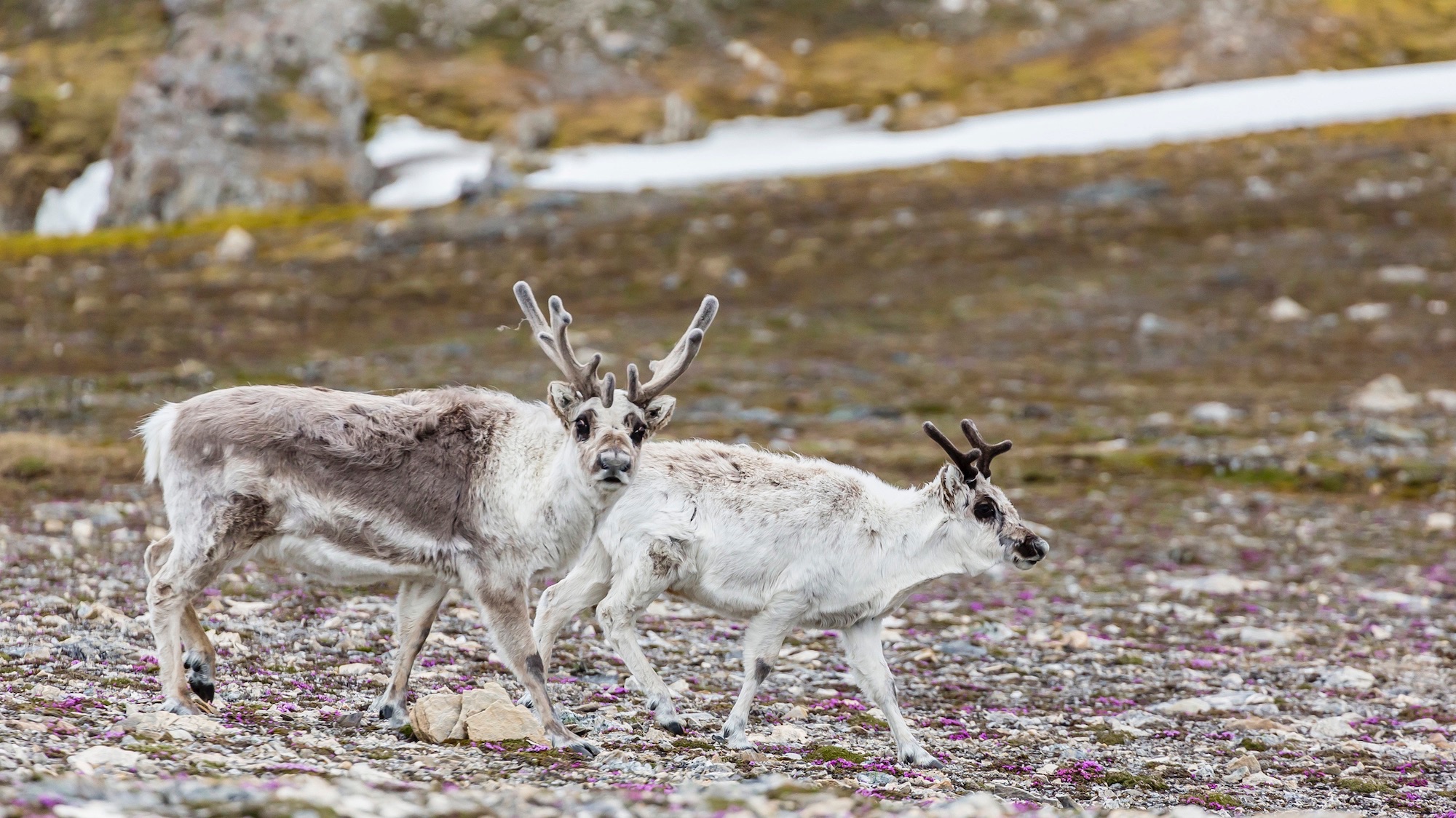
FACT: Caribou moms evolved to store energy in their antlers—and snack on those delicious bones
First things first: caribou and reindeer are the same thing. They’re also the only deer species where females grow antlers. This is very strange, not just because antlers are generally a male trait, but because antlers are a huge pain in the butt.
Unlike horns, which are almost always permanent and are made of bone covered in keratin, antlers are true bone, and they’re shed and regrown every year. They represent some of the fastest growing bones in the world. They require a ton of energy (and blood) to grow and maintain, and then they just…fall off. On male deer, antlers provide stark evidence of genetic fitness; a strong set of face-bones shows that you’re really good at getting lots of food, because otherwise you wouldn’t have had the energy to sprout them. But why do female caribou bother with them?
According to a new study, the answer might be simple: moms need snacks.
Researchers collected a bunch of bones from the Arctic National Wildlife Refuge of Alaska, which is home to the Porcupine Caribou Herd. This group of around 200,000 makes a 1,500-mile round-trip migration between their winter range and their calving grounds, which is the longest land migration of any mammal. Because female caribou drop their antlers right around the same time that they have their calves, the area is absolutely covered in lady antlers.
Of the 1,567 antlers the team checked out, 86 percent were covered in gnaw marks—99 percent of which came from other caribou. Other types of bones in the area had more diverse bitemarks, indicating that caribou had a specific preference for snacking on their own shed antlers.
The study notes that antlers are high in calcium and phosphorus, so they provide necessary nutrients to new moms. When a caribou feels peckish, she can just grab the nearest antler and chew it like a cigar. In a way, many generations of reindeer ladies have helped build up a robust store of snacks for new moms to share.
For more fun bone-chewing facts, check out this vintage episode about deer caught chewing on human skeletons.
FACT: The “hokumpoke” bird uses its sweet dance moves to charm worms
The American Woodcock is a bird of many names: The Bogsucker. The Big Eye. The Timberdoodle. The Hokumpoke. It earned at least a few of those funky nicknames by doing a funky little dance:
Why do they bust out those moves? It might be so they can charm worms up out of the dirt.
By rock-stepping to an instinctive beat, they mimic the vibrations of moles digging around underground. When worms sense mole-like vibrations—which often means they’re about to get eaten—their best escape route is up. Unfortunately for the earthworms, this puts them right where the hungry woodcocks want them.
That might sound pseudoscience-y, akin to water dowsing or whathaveyou, but it’s actually a phenomenon that’s been discussed in scientific literature for hundreds of years! Darwin himself wrote about the idea in his work on earthworms. “It has often been said that if the ground is beaten or otherwise made to tremble, worms… leave their burrows.”
In fact, humans have known about this trick for centuries and often harness it to improve our own “worm charming” skills.
Listen to this week’s episode to learn more!
FACT: Neutrinos are too wild for the standard model of physics
This week’s special guest is Chanda Prescod-Weinstein, astrophysicist and author of the new book “The Edge of Space-Time: Particles, Poetry and the Cosmic Dream Boogie.” On Chanda’s last Weirdest Thing appearance, she gave us a lesson on radioactive bananas and touched briefly on why she’s started referring to neutrinos as “non-trinary.” Now she’s back for a deeper dive on what that means—and why there’s so much about physics that we still don’t understand. You can get Chanda’s latest title wherever books are sold!
The post Why do female reindeer have antlers? Cannibalism, probably. appeared first on Popular Science.