
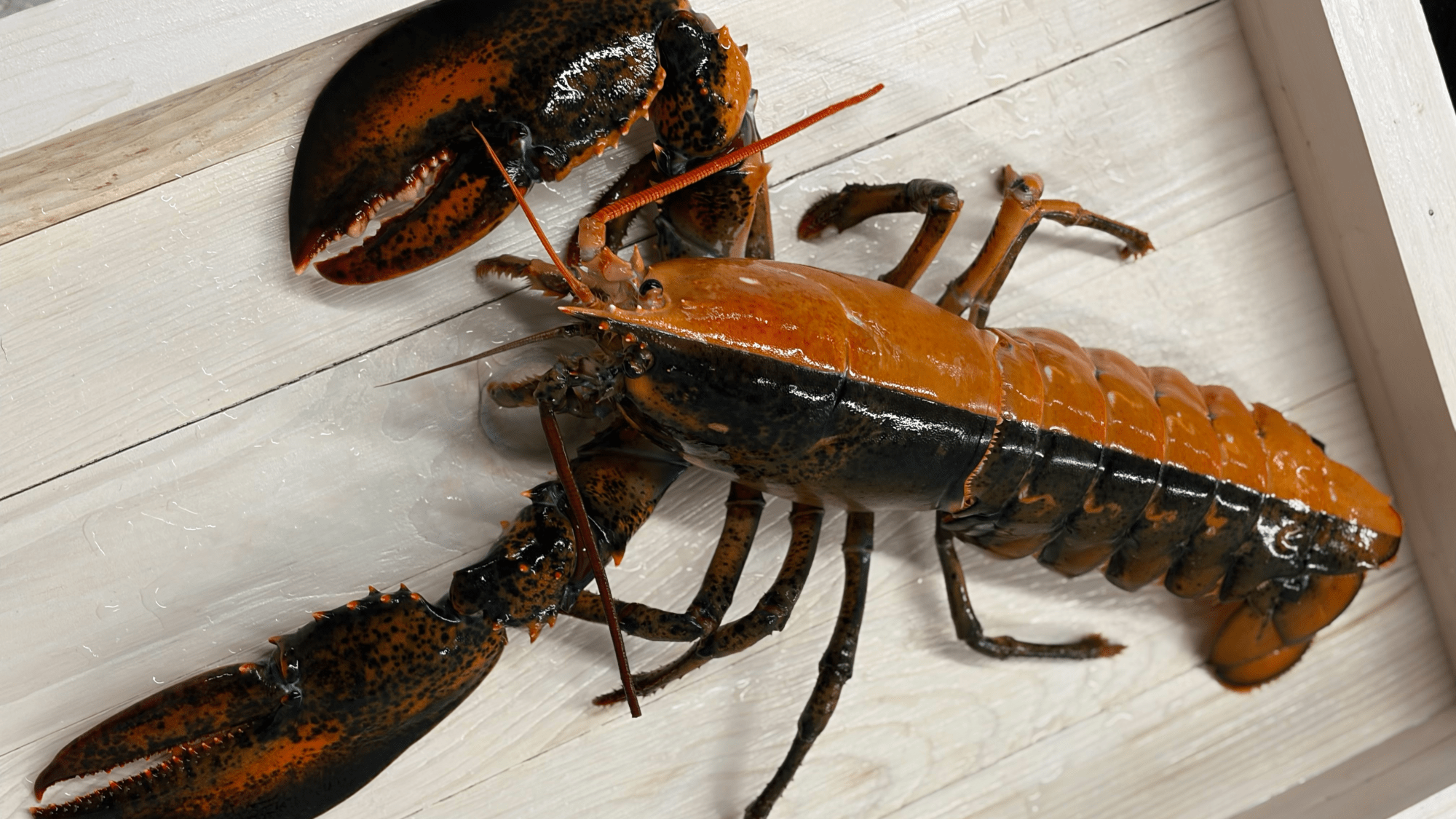
A two-toned lobster is set to make a splash at the Woods Hole Science Aquarium in southeastern Massachusetts. Lobstermen on the fishing vessel Timothy Michael caught the rare split-color (bilateral) lobster off the coast of Cape Cod on April 16 and donated it to the museum. This rare split coloration occurs in roughly 1 in 50 million lobsters.
“As soon as we saw this beautiful and unique lobster and were offered the chance to be her potential home, we immediately started thinking about which tank to put her in and began preparations to pick her up from Wellfleet Shellfish Company in Eastham, about an hour’s drive from Woods Hole,” aquarium biologist Julia Studley tells Popular Science.
“When something that rare comes across our docks, we see it as part of our role to share it with the broader community—Woods Hole Science Aquarium was the perfect fit for this lucky lobster,” Wellfleet Shellfish Company Chief Operating Officer Dan Brandt also tells Popular Science.
Unusual coloration in lobsters is typically the result of a few genetic anomalies. Lobsters have several layers of a pigment called astaxanthin. This pigment shows up in the layers of red, yellow, and sometimes blue. When all of those color layers are stacked up, they give lobsters a mottled blotch pattern of oranges, reds, blues, pinks, purples, yellows, and browns. Sometimes the color pigments are either not expressed or overexpressed resulting in blue (1 in 2 million), red (1 in 10 million), albino (1 in 100 million), cotton candy (1 in 100 million) lobsters, and split-colored like this new addition (1 in 50 million).
“Split-colorization occurs when two fertilized, unlaid eggs contact each other, causing one to absorb the other,” Studley explains. “This creates a lobster with two sets of genetic information, and the ability to store color pigments differently on either side of its shell.”
Occasionally, this may lead to gynandromorphism—when an organism is half male and half female. This has been observed in a bird in Colombia called the green honeycreeper (Chlorophanes spiza), as well as in some bees, butterflies, spiders, and stick insects. Pigment irregularities can also arise during development, which prevent a single color from dominating.
Aside from its two-toned hue, the lobster’s sheer size is also raising eyebrows.
“Lobsters with unusual coloring often don’t have the camouflage to thrive for long, so the fact that this one reached over three pounds means it’s been through a lot,” explains Brandt. Since it does not have the best natural camouflage, the aquarium will be able to keep it safe from predators.
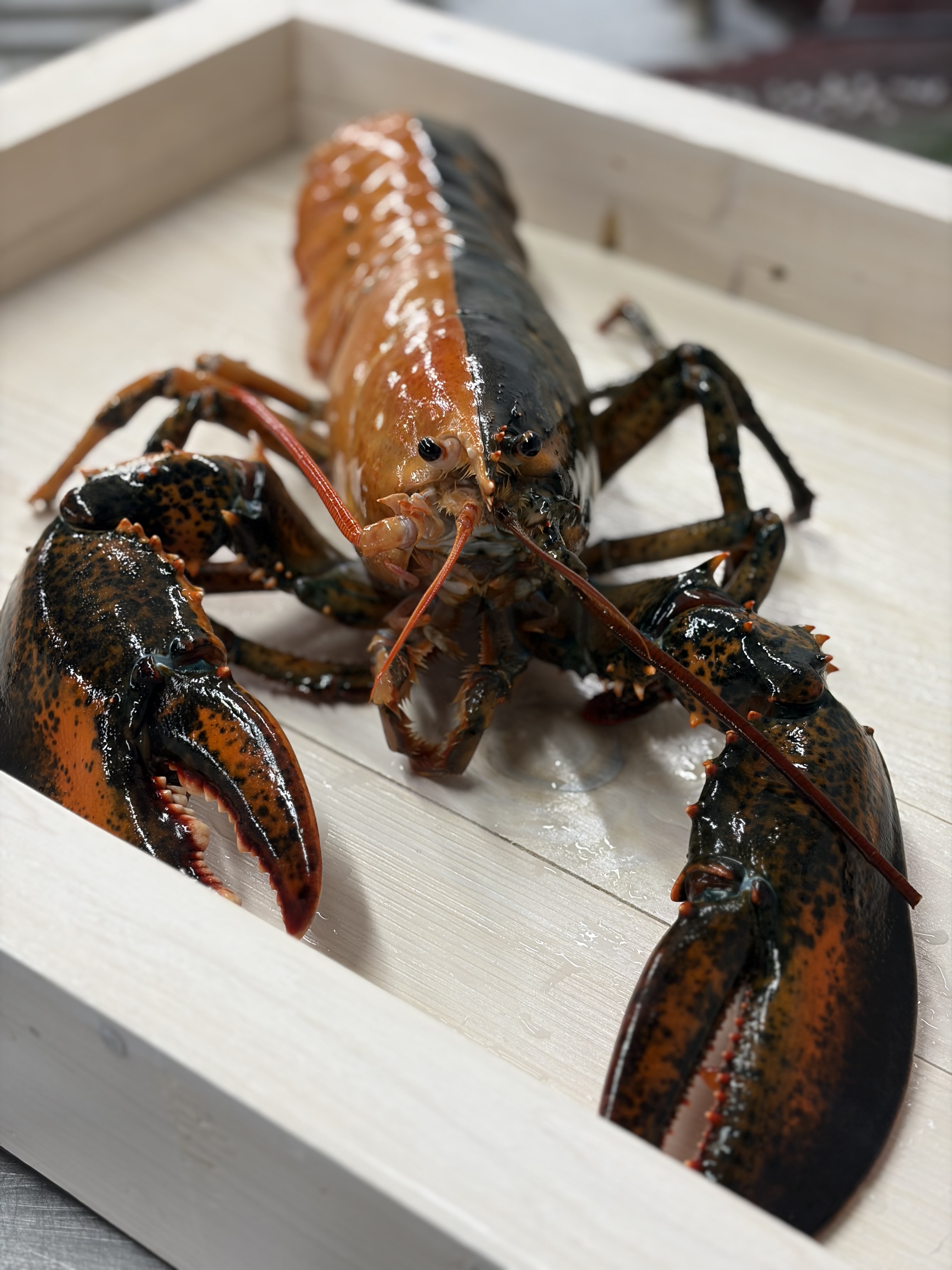
The team will continue to care for the crustacean during construction. Studley says it will receive a name once they get to know a bit more about its personality. Since lobsters may live up to 100 years, they want to make sure that they get the name right. The crustacean will go on display when the aquarium reopens after a major renovation in early 2027.
“We hope visitors take away just how unique this animal is, and how amazing it is to see genetics at work in a very iconic local species,” Studley concludes. “This animal is not only fascinating to look at but also serves as a great reminder of how intricate genetic mechanisms are and how much we should thank them for the diversity we see in the world around us!”
The post 1 in 50 million split-colored lobster found in Massachusetts appeared first on Popular Science.